Look beside the finished piece
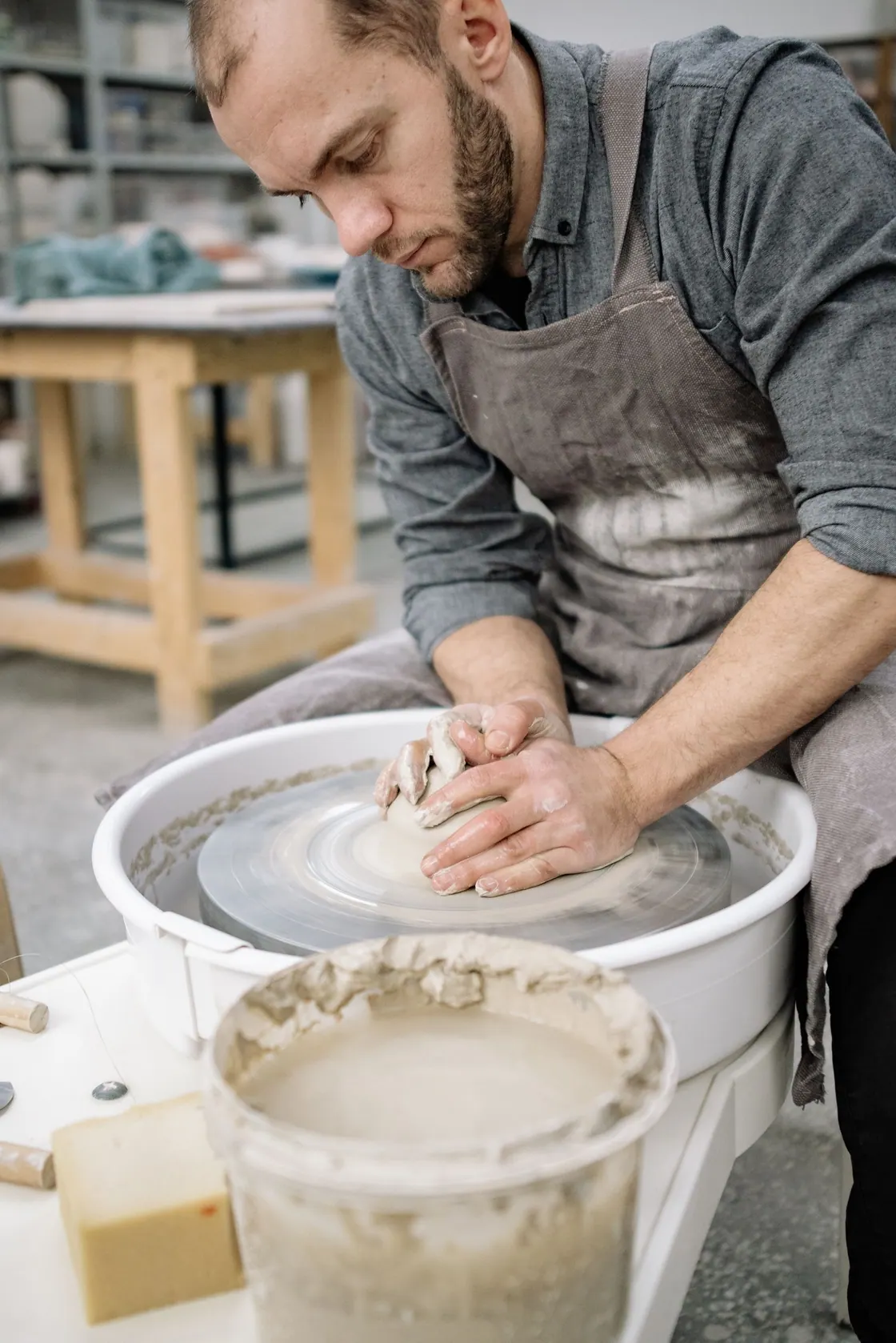
A finished bowl offers a clean outline. The bench beside it is more complicated: a damp cloth, a tool laid within reach, a trial piece kept for comparison. In this imagined workshop, the objects around the work explain as much as the object itself.
It is tempting to make a craft story about a single inspired gesture. Most practical work contains repetition. A maker prepares a surface, checks a dimension, adjusts a tool and tries again. The decisions may be small, but the finished piece carries their accumulated effect.
Begin by looking at what has been kept nearby. A sample can record a colour, a shape or an unsuccessful attempt. Its value may lie in the question it answers for the next piece, rather than whether it belongs on a display shelf.
Let the material set a question
Clay, wood and cloth each bring their own constraints. This essay is not a making tutorial, and a photograph cannot explain safe equipment use or a complete process. What it can prompt is a better way to look: what is the material being asked to do, and what choices does that create?
A rim can be thinner or heavier. A handle can sit high or low. A surface can retain evidence of the hand or be worked towards a more regular finish. These are useful observations because they describe what can actually be seen.
When visiting a real working space, follow the host’s arrangements and ask before touching tools or work. A studio may contain hazards and unfinished pieces that are not apparent to a visitor. Access and photography should be agreed, not assumed.
Look again at the ordinary object
Back at home, choose a cup or bowl you use often. Notice its weight, where your fingers settle and how it occupies a shelf. Familiarity can hide these qualities; looking closely brings them back into view.
The point is not to judge every object as a work of art. It is to recognise that ordinary things carry decisions about use, material and proportion. The maker’s bench is one place where those decisions become visible, before daily life makes them feel inevitable.
This is an original illustrative essay, not an interview or account of a named studio visit. The stock photograph shows a separate maker at work and is used with its own photo licence.
Original sample writing for The Borough Journal. No real reporting, interviews, quotations or named local businesses are represented.